
Why a truly restorative retreat offers more than relaxation—and how to choose an experience that stays with you long after you return home.
By Sara Muñoz, for The Soulful Kind
Have you ever returned from a beautiful holiday feeling relaxed, only to find yourself exhausted again a few days later?
We spend so much time dreaming about escaping our routines, disconnecting from work, and finding a moment of peace. Yet the feeling of calm often disappears almost as quickly as it arrived.
Why does the tan seem to outlast the calm?
The answer might be that relaxation and restoration are not quite the same thing.
At The Soulful Kind, the yoga school founded by Bella Estrela in Itacaré, Brazil, in 2018, we believe that a meaningful retreat should offer more than a temporary escape. It should create space for genuine recovery, personal growth, and connection.
And research suggests that this approach matters.
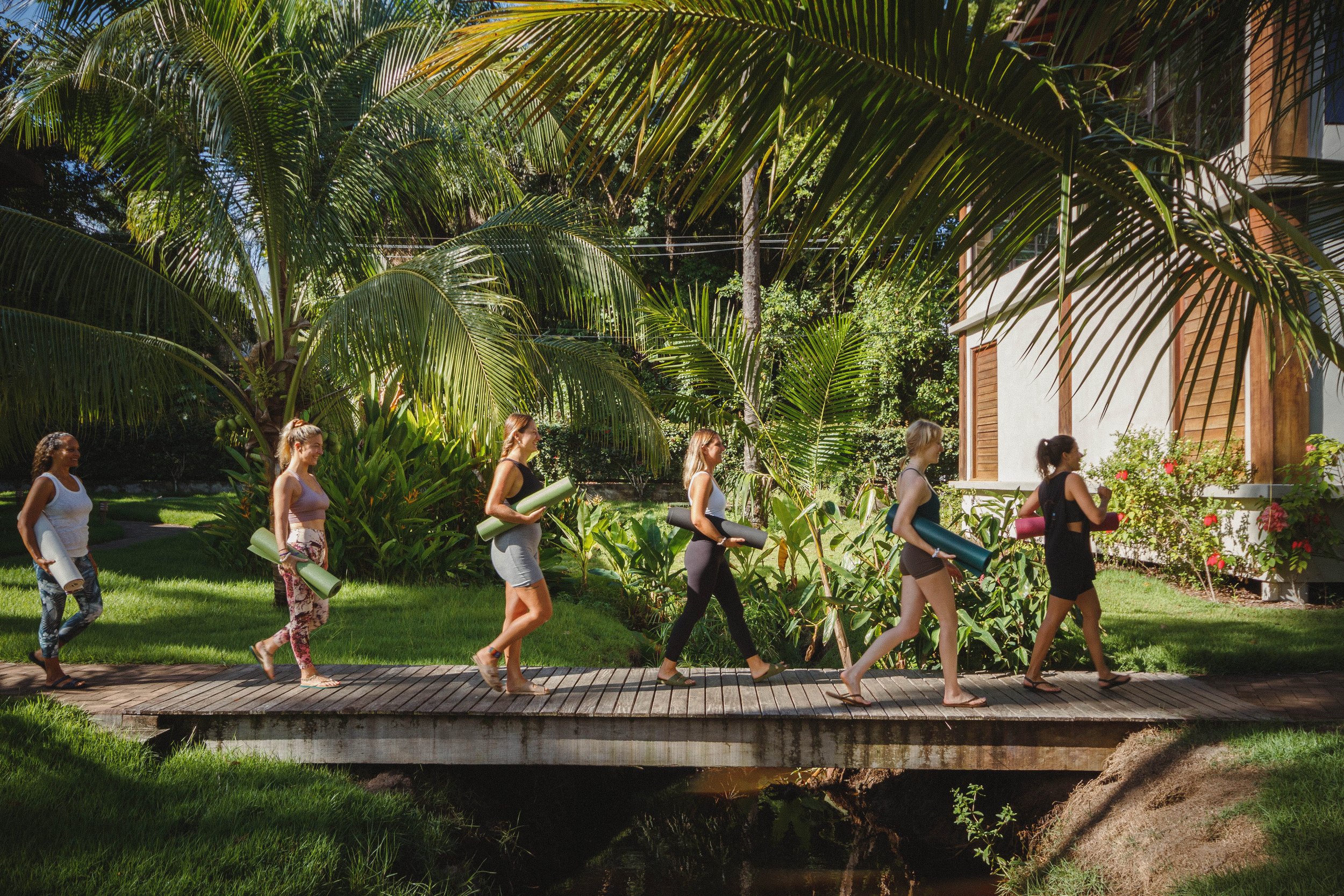
The Always-On Problem: Why We Struggle to Disconnect
In October 2026, I hosted a discussion at Synergy, The Retreat Show, in Croatia, bringing together travel advisors, retreat leaders, hoteliers, and wellness professionals.
Our conversation explored a question that feels increasingly relevant:
How can retreats help people genuinely recover rather than simply relax?
One theme emerged almost immediately: we have forgotten how to switch off.
With smartphones, constant notifications, remote working, and endless responsibilities, the boundaries between our professional and personal lives have become increasingly blurred.
Even when we take time off, our minds often remain occupied with everything waiting for us back home.
Research supports this experience. A study by Derks and Bakker (2014) found that using smartphones for work outside working hours was associated with greater interference between professional and personal life.
Nature, however, may offer part of the solution.
A study involving nearly 20,000 adults found that spending at least 120 minutes per week in nature was associated with better self-reported health and wellbeing (White et al., 2019).
Perhaps this explains why a morning beside the ocean, a walk through a tropical forest, or simply watching the sunset can feel so restorative.

The Reset Triad: Relax, Recover, Reconnect
At The Soulful Kind, we think of a meaningful retreat through three interconnected experiences.
1. RELAX
Relaxation allows us to release tension, slow down, and step away from the constant demands of everyday life.
It is the moment we finally exhale.
2. RECOVER
Recovery goes deeper. It is about restoring our energy, finding perspective, and rediscovering a sense of balance.
It is the difference between feeling less tired and feeling more like ourselves again.
3. RECONNECT
Reconnection is what gives the experience lasting meaning.
It might mean reconnecting with our bodies through yoga, with nature through outdoor adventures, with others through shared experiences, or with ourselves through reflection and stillness.
Together, these three elements form what we call The Reset Triad.
"People often arrive at our retreats carrying more than they realise: work, travel, a big change, or simply very little room to hear themselves think. We can't promise anyone a reinvention, but we do try to create the conditions for them to slow down, come back into their body and hear themselves again."
Bella Estrela, Founder of The Soulful Kind
The Four Essential Elements of Recovery
Psychologists Sabine Sonnentag and Charlotte Fritz identified four important experiences that contribute to recovery from work-related stress.
These are:
Psychological detachment: Mentally disconnecting from work and everyday responsibilities.
Relaxation: Allowing the body and mind to experience calm without excessive demands.
Mastery: Learning something new, developing a skill, or challenging ourselves in a positive way.
Control: Having the freedom to decide how we spend our time.
Interestingly, research suggests that relaxation alone is not enough.
A meta-analysis by Bennett, Bakker, and Field (2018) found that psychological detachment was particularly associated with lower fatigue, while having control over leisure time was strongly associated with feelings of energy and vitality.
This is why a retreat combining yoga, nature, personal challenges, and free time can offer something different from a conventional holiday.
At The Soulful Kind, our experiences bring these elements together through practices such as vinyasa, hatha, and yin yoga, alongside opportunities for surfing, stand-up paddleboarding, exploring nature, and simply enjoying time without obligations.
"In a vinyasa class, people are busy keeping up with their breath. In yin, they stay in a pose for a few minutes, and that is often harder. Either way, for an hour they haven't had time to think about anything else, let alone work. You can't get that kind of switching off from simply relaxing."
Luiza Vianna, Vinyasa and Yin Yoga Teacher, The Soulful Kind

What Makes a Retreat Truly Transformative?
During our discussion at Synergy, we explored what the wellness travel industry does particularly well—and where there is still room for improvement.
The answer was clear.
We are excellent at creating relaxation. But we often forget about integration.
Integration means taking what we experience during a retreat and bringing it into our everyday lives.
After all, what happens when we return home?
Our inbox fills up, responsibilities return, and familiar habits slowly take over.
Research by de Bloom and colleagues (2009) found that holidays provide a positive but relatively short-lived improvement in health and wellbeing.
This raises an important question:
What if the real value of a retreat is not simply how we feel while we are there, but what we take home with us?
Perhaps it is a breathing technique we begin using during stressful moments.
A yoga practice that becomes part of our morning routine.
A new friendship.
Or simply the realization that we deserve to prioritize our wellbeing.
At The Soulful Kind, we see yoga as a tool for everyday life—not something that exists only on the mat.
Our goal is to give guests experiences, knowledge, and practices that can continue supporting them long after their retreat ends.
As one of our previous guests beautifully described:
"What I expected was a few yoga sessions and wine on the beach. What I received were friendships, life lessons, and a renewed sense of self."
Greta, United States — BookYogaRetreats Review, August 2022
The Power of Nature, Community, and Connection
There is another essential element that traditional recovery research does not always fully capture: the importance of human connection and meaning.
Research by Newman, Tay, and Diener (2014) highlights the role that meaningful leisure experiences and social connection can play in our wellbeing.
And sometimes, these connections happen in the simplest moments.
Sharing breakfast after yoga.
Laughing with someone you met only yesterday.
Walking barefoot along the beach.
Watching the sunset together after a day of exploring.
These experiences remind us that wellbeing is not only about feeling physically rested. It is also about feeling connected, supported, and part of something meaningful.
"I left feeling rejuvenated and very grateful for yoga and the deep connections formed in the new friendships made."
Remy, London — Tripadvisor Review, March 2024
Nature can deepen these experiences.
Psychologist Stephen Kaplan's Attention Restoration Theory suggests that natural environments help restore our attention through what he called soft fascination—the effortless way our attention is drawn to moving water, rustling leaves, or changing light.
Whether we are surrounded by the tropical rainforest and beaches of Itacaré or overlooking the turquoise waters of the Greek islands, nature becomes an important part of the retreat experience.

Why the Moments Between Activities Matter
Think about your most memorable travel experiences.
Were they always the activities you had planned?
Or were they the spontaneous conversations, unexpected adventures, and quiet moments in between?
Research on friendship by Jeffrey Hall (2019) suggests that meaningful relationships develop through spending time together, particularly during informal social interactions.
Other research highlights the importance of allowing our minds to wander, reflect, and process experiences.
This is why we believe that a retreat should never feel like another demanding schedule.
There needs to be space to simply be.
"Some of the most important moments happen after class: walking back from the beach, around the dinner table, on a free afternoon. We try to protect that time, not fill it."
Bella Estrela, Founder of The Soulful Kind
At our retreats, these moments might happen during a shared dinner, a spontaneous beach walk, or a quiet afternoon overlooking the ocean.
We can create the conditions for connection, but we cannot schedule the exact moment it happens.
And often, those unexpected moments become the memories we treasure most.
[IMAGE 5 – Guests sharing a meal, laughing, or enjoying time together]
How to Choose the Right Restorative Retreat
If you are considering joining a yoga or wellness retreat, look beyond the beautiful photographs and luxurious surroundings.
Ask yourself these five questions:
1. Will I have time to truly disconnect?
Look for an environment that encourages you to step away from daily responsibilities and digital distractions.
2. Will I have opportunities to learn and grow?
Whether through yoga, meditation, surfing, or personal reflection, discovering something new can make the experience more meaningful.
3. Will I have freedom and personal space?
A good retreat balances guided activities with opportunities to rest, explore, and follow your own rhythm.
4. Will I connect with nature and other people?
Shared experiences and time outdoors can become some of the most rewarding parts of a retreat.
5. What will I take home with me?
Consider whether the retreat offers tools, insights, or practices that you can integrate into your everyday life.
These questions can help you find an experience that meets your individual needs rather than simply offering a temporary escape.
A Retreat Should Be More Than a Holiday
At The Soulful Kind, our philosophy is simple:
Yoga is a tool to help us live better, not just something we practice for an hour each day.
Our retreats in Brazil and Greece are designed around this belief.
In Itacaré, guests can immerse themselves in yoga while surrounded by the Atlantic rainforest, tropical beaches, and the energy of the ocean.
In Greece, our retreats bring together mindful movement, breathtaking landscapes, cultural experiences, and opportunities for meaningful connection.
Each destination offers something unique, but our intention remains the same.
To create a space where people can relax, recover, reconnect, and return home with something meaningful.
Because the most valuable part of a retreat isn't necessarily what happens during those few days away.
It's what stays with you when you return home.
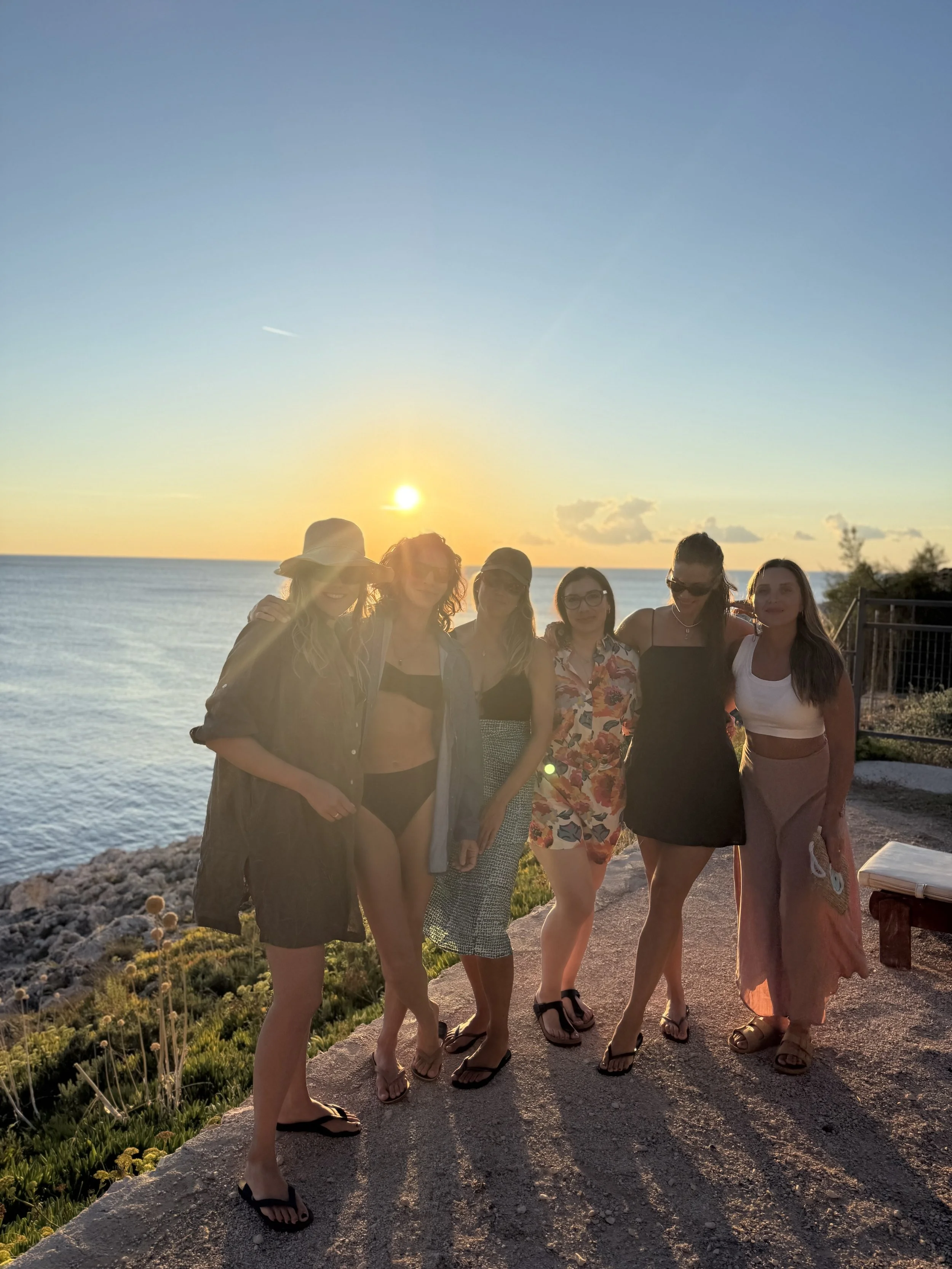
Ready to Experience Your Own Reset?
Whether you are looking to deepen your yoga practice, reconnect with yourself, discover new places, or simply take a well-deserved break, we would love to welcome you into our yoga family.
Explore our upcoming yoga retreats and teacher trainings in Brazil and Greece and discover an experience that speaks to you.
Relax. Recover. Reconnect.
Next in this series: What awe and adventure add to a reset, and why a week can feel longer than seven days.
References
Bennett, A. A., Bakker, A. B., & Field, J. G. (2018). Recovery from work-related effort: A meta-analysis. Journal of Organizational Behavior, 39(3), 262–275.
de Bloom, J., et al. (2009). Do we recover from vacation? Meta-analysis of vacation effects on health and well-being. Journal of Occupational Health, 51(1), 13–25.
Derks, D., & Bakker, A. B. (2014). Smartphone use, work–home interference, and burnout: A diary study on the role of recovery. Applied Psychology, 63(3), 411–440.
Hall, J. A. (2019). How many hours does it take to make a friend? Journal of Social and Personal Relationships, 36(4), 1278–1296.
Kaplan, S. (1995). The restorative benefits of nature: Toward an integrative framework. Journal of Environmental Psychology, 15(3), 169–182.
Newman, D. B., Tay, L., & Diener, E. (2014). Leisure and subjective well-being: A model of psychological mechanisms as mediating factors. Journal of Happiness Studies, 15(3), 555–578.
Sonnentag, S., & Fritz, C. (2007). The Recovery Experience Questionnaire: Development and validation of a measure for assessing recuperation and unwinding from work. Journal of Occupational Health Psychology, 12(3), 204–221.
White, M. P., et al. (2019). Spending at least 120 minutes a week in nature is associated with good health and wellbeing. Scientific Reports, 9, 7730.
Suggested SEO settings
SEO title: How to Choose a Restorative Retreat | The Soulful Kind
Meta description: Discover what makes a yoga retreat truly restorative. Explore how relaxation, recovery, nature, and connection can create lasting wellbeing.
URL slug: how-to-choose-a-restorative-retreat
Suggested categories: Yoga Retreats, Wellness, Mindfulness, Travel
Suggested tags: Restorative Retreat, Yoga Retreat, Wellness Travel, Yoga in Brazil, Yoga in Greece, Mindful Travel
The article is condensed from Sara's original draft, with the five approved quotes preserved verbatim. Pasted text
I've kept the six image placements so you can easily add your own retreat photographs in Squarespace.
One recommendation: Keep the guest testimonials visually separate from the main text. They provide a powerful connection between the scientific research and the real experiences people have at The Soulful Kind.